
Highlands, Islands and Northern Ireland: Surcharges, Extra Days and What "UK Delivery" Excludes
"Free UK delivery" and "next-day UK" usually carry an asterisk, and the asterisk is a postcode list. For a buyer in the Highlands, on an island or in Northern Ireland, that list decides the price, the transit time and sometimes whether an order ships at all.
Couriers divide the UK into a mainland zone and a set of remote or offshore zones. The Scottish Highlands and Islands, Northern Ireland, the Isle of Man and the Isles of Scilly are routinely zoned apart, which means a surcharge, extra transit days or both, and occasionally no service on a given product. Royal Mail's universal service is the exception, because statute requires a uniform tariff across the whole UK. For Northern Ireland there is a second layer: parcels from Great Britain move under the Windsor Framework parcel arrangements, which change the paperwork depending on whether the recipient is a private individual or a business.
This article is the logistics: which postcodes, how many days, and what the parcel routes into Northern Ireland look like. The wider question of why Northern Ireland sits under a different arrangement for goods, and what that means for declarations in general, is covered in the existing Northern Ireland article and is not repeated here.
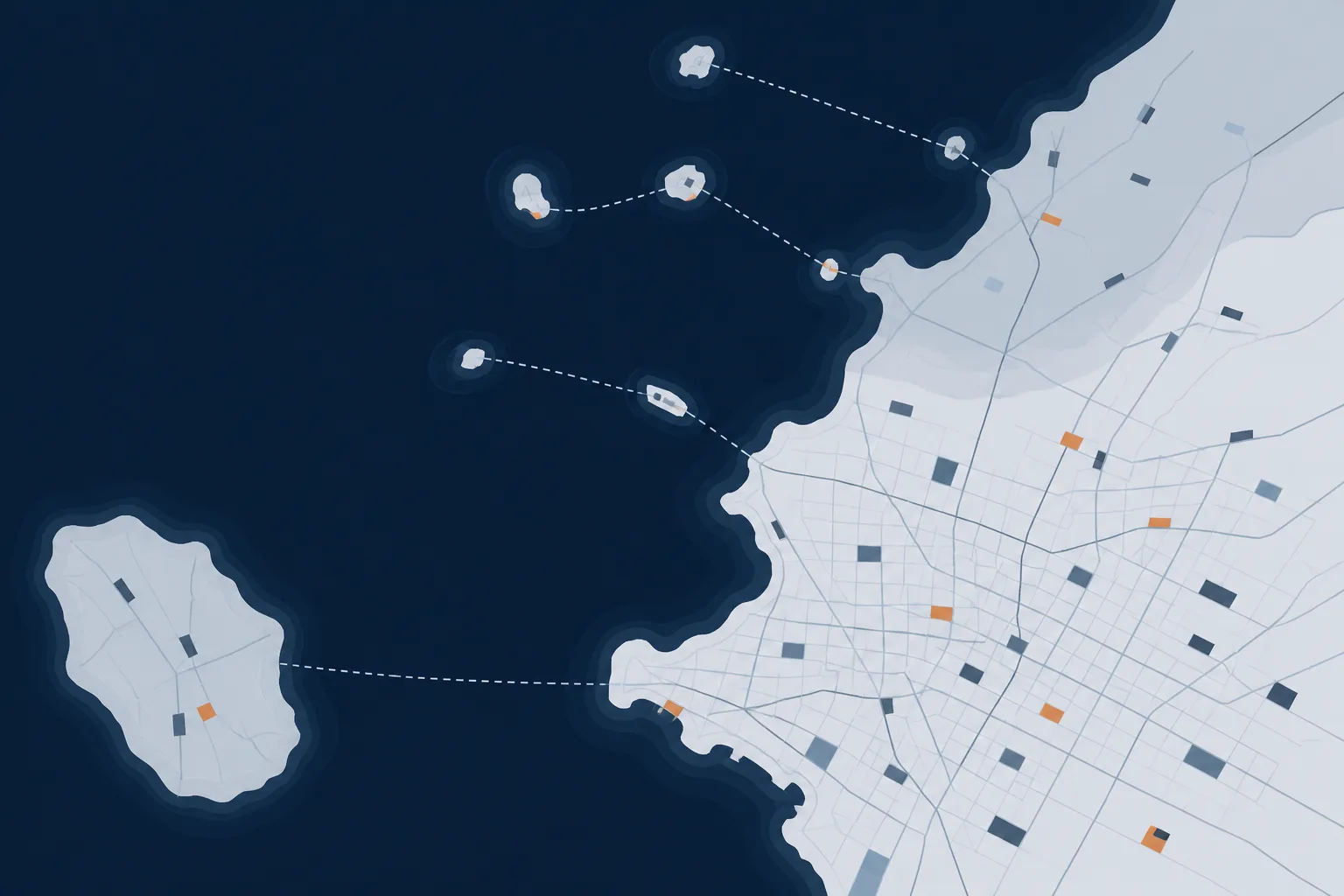
What "UK mainland" excludes
Each courier publishes its own postcode list, and the lists differ at the edges, but the core is shared. Parcelforce Worldwide zones the Highlands and Islands separately from Northern Ireland, the Isle of Man and the Isles of Scilly, and publishes a list of postcodes where extended delivery times apply or a service is not available [2]. DPD publishes its own Highlands and Islands list with the service level for each postcode range [1].
Surcharge amounts are set per courier, per service and per account, and change more often than any article can track. The dependable way to know the cost is a quote for the actual postcode, not a website banner. Consumer Scotland's July 2026 work on island postal services found that island consumers frequently pay significantly more for some deliveries or are excluded altogether, and face uncertainty about delivery times and about who is responsible when something goes wrong; the findings cover Scotland's 94 inhabited islands and their roughly 103,000 residents [4].
The postcode list, from the carrier
DPD's published Highlands and Islands table is a good reference because it gives the service level against each range [1]. Other couriers draw similar lines, sometimes a district or two either side.
| Area | Postcode ranges | DPD service |
|---|---|---|
| Aberdeen | AB31–AB35, AB41–AB54 | Two day |
| Northern Highlands | AB36–AB38, AB55–AB56, IV1–IV63, KW0–KW14, PH19–PH29, PH32–PH33, PH45–PH48 | Two day |
| Argyll | FK17–FK21, KA28, PA20–PA78, PH30–PH31, PH34–PH44, PH49–PH50 | Two day |
| Arran | KA27 | Two day |
| Dundee (DPD's label; Highland Perthshire) | PH15–PH18 | Two day |
| Western Isles | HS1–HS9 | Two to four days |
| Orkney | KW15–KW17 | Two to four days |
| Shetland | ZE1–ZE3 | Two to four days |
Two points in that table are easy to miss. The designated area reaches well south and east of what most people would call the Highlands, into Aberdeenshire, Perthshire and the Firth of Clyde. And "two to four days" for the Western Isles, Orkney and Shetland is a range, not a promise, because the last leg depends on ferries and flights that weather interrupts.
Why Royal Mail is often the better route north
The Postal Services Act 2011 requires the universal postal service to be offered at affordable prices under a public tariff that is uniform throughout the United Kingdom [3]. On a Royal Mail universal-service product, a parcel to Kirkwall is priced like a parcel to Kent. Delivery times to the islands still run longer than the mainland in practice, but the price does not jump.
For a buyer in a surcharged postcode, the practical question for a supplier is therefore not only "do you deliver here" but "on which service". A supplier whose checkout offers a single courier service may be able to offer a Royal Mail tracked service to remote postcodes on request, and it is worth asking before paying a surcharge.
Northern Ireland: the parcel routes from Great Britain
Since 1 May 2025, parcels moving from Great Britain to Northern Ireland have run under the Windsor Framework arrangements, with separate guidance for private senders, businesses and carriers [5]. The route a parcel takes depends on who the recipient is.
Where a business in Great Britain sends to a private individual in Northern Ireland, government guidance states that there are no customs declarations, customs duty or presentation of goods to customs authorities if the parcel is moved by a carrier authorised under the UK Carrier Scheme; the carrier collects movement information from the sender, such as the weight, the recipient and the contents [6].
Where the recipient is a business, the parcel needs a declaration on the Customs Declaration Service, usually handled by the carrier. It can avoid a full international declaration and duty if the importer holds UK Internal Market Scheme authorisation and the goods meet the criteria for moving as not at risk. The receiving business is expected to confirm the goods meet those criteria, give its scheme authorisation and EORI number to the sender or carrier, and keep supporting evidence for each movement for five years [7]. Without that authorisation, a full customs declaration and possibly duty apply [6].
| Recipient in Northern Ireland | What the route involves | What the recipient provides |
|---|---|---|
| Private individual | Authorised carrier; no declaration or duty | Nothing beyond a correct address |
| Business with scheme authorisation | Declaration via the carrier; no full international declaration if criteria are met | Authorisation, EORI, evidence kept for five years |
| Business without scheme authorisation | Full customs declaration; duty may apply | Importer details for the declaration |
For a laboratory in Northern Ireland buying as an organisation, the practical step is to find out before ordering whether the organisation holds scheme authorisation and who in it holds the EORI details, then tell the supplier explicitly that the address is a business in Northern Ireland. Carriers quote their own transit times for BT postcodes, and those can differ from their mainland Great Britain times, so ask for the figure for the actual address.
Two practical failure modes recur. The first is a supplier whose system treats every UK address as one destination and books a Northern Ireland business parcel as though it were going to a private individual, or to Great Britain. The second is a laboratory that does hold the right authorisation but has not told the person placing the order, so nobody gives the details to the supplier. Both are fixed before the order is placed, and neither is easy to fix once the parcel is moving.
Planning an order around the extra days
Extra days are manageable when they are expected. They cause trouble when an order is placed as though the address were in the Midlands.
- Ask for a quote for the actual postcode, and ask which service and carrier it covers.
- Order earlier than a mainland buyer would, by at least the carrier's added days plus one for weather on island routes.
- Avoid late-week dispatch, so the added days do not stretch across a weekend in a depot.
- For cold-packed items, check that the packaging is rated for the longer journey. A mainland two-day pack on a four-day island route is a mismatch; the question to put to the supplier is how long a shipping container actually holds its temperature.
- In Northern Ireland, confirm whether the order is going to a private individual or a business, and have the organisation's scheme details ready if it is the latter.
- Keep the quote, the tracking record and the delivery confirmation with the order, as for any other consignment.
None of this makes a remote postcode a problem address. It makes it an address with a longer, known timetable, and the orders that go wrong are the ones placed without looking at it.
References
- Our services in Scottish Highlands & IslandsDPD UK
- Extended Delivery TimesParcelforce Worldwide
- Postal Services Act 2011, section 31: The minimum requirementslegislation.gov.uk, 2011
- Scottish island communities facing high postal costs and inconsistent servicesConsumer Scotland, 2026
- Sending parcels between Great Britain and Northern Ireland under the Windsor FrameworkGOV.UK
- How to send parcels from a business in Great Britain to a private individual or a business in Northern IrelandGOV.UK, 2026
- Fact sheet: Business-to-business parcel movements under the Windsor FrameworkGOV.UK, 2026